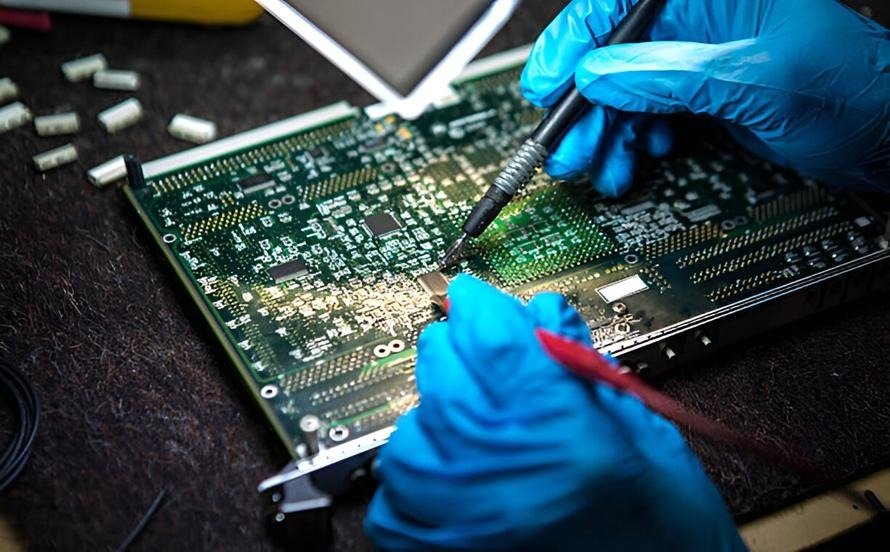
The rapid advancement of modern electronics has created a growing demand for printed circuit boards that offer better signal integrity, improved electromagnetic compatibility, and greater power stability. Devices such as smartphones, automotive control systems, medical equipment, aerospace electronics, and high-speed communication hardware all require circuit boards capable of supporting increasingly complex designs while maintaining reliable electrical performance. One technology that helps meet these requirements is the Capacitive PCB.
Unlike conventional printed circuit boards, a capacitive PCB is designed to incorporate controlled capacitance within the PCB structure itself. By utilizing carefully engineered dielectric materials and optimized layer configurations, these circuit boards improve power distribution, reduce electrical noise, and enhance signal quality. As electronic systems become more compact and operate at higher frequencies, integrated capacitance has become an important solution for improving overall circuit performance.
Producing high-quality capacitive PCBs requires specialized design expertise, precision fabrication, and advanced manufacturing technologies. An experienced Capacitive PCB Manufacturer understands the electrical characteristics required for these specialized boards and ensures they meet the demanding performance standards of modern electronic applications.
This article explores what capacitive PCBs are, how they work, their manufacturing process, advantages, applications, and the importance of choosing a reliable manufacturing partner.
What Is a Capacitive PCB?
A Capacitive PCB is a printed circuit board designed to incorporate distributed capacitance directly into its multilayer structure. Instead of relying entirely on discrete capacitor components mounted on the PCB surface, the board itself contributes to the circuit’s capacitive characteristics through specially designed dielectric layers and closely spaced copper planes.
The integrated capacitance helps stabilize power distribution by reducing voltage fluctuations and minimizing electrical noise. This is particularly valuable in high-speed digital circuits where rapid switching generates transient currents that can affect overall system performance.
Capacitive PCBs are commonly used in multilayer board designs where carefully selected dielectric materials and optimized copper layer spacing create controlled capacitance across power and ground planes.
Although traditional capacitors remain necessary for many circuit functions, integrating capacitance into the PCB structure provides additional electrical stability while supporting increasingly compact electronic designs.
How Capacitive PCBs Work
The operating principle of a Capacitive PCB is based on the natural capacitance that exists between conductive layers separated by dielectric materials. In multilayer PCB construction, power planes and ground planes positioned close together create distributed capacitance throughout the board.
When electronic components switch rapidly during operation, they generate temporary changes in current demand. The integrated capacitance within the PCB responds quickly by supplying localized energy, helping maintain stable voltage levels and reducing power fluctuations across the circuit.
Because the capacitance is distributed throughout the PCB rather than concentrated in individual components, electrical performance improves across a broader frequency range. This contributes to cleaner power delivery and more stable signal transmission, particularly in high-speed digital and communication systems.
Proper PCB design, dielectric material selection, and layer stackup optimization are essential for achieving the desired capacitive performance.
Benefits of Capacitive PCB Technology
One of the primary advantages of a Capacitive PCB is improved power integrity. Integrated capacitance helps stabilize voltage supplied to integrated circuits, processors, memory devices, and communication modules during rapid switching events.
Another important benefit is reduced electromagnetic interference. By minimizing power supply noise and voltage ripple, capacitive PCBs improve electromagnetic compatibility and reduce unwanted emissions that could interfere with nearby electronic systems.
Signal integrity also improves because cleaner power distribution reduces timing errors, signal distortion, and voltage fluctuations within high-speed circuits. This becomes increasingly important as data transmission speeds continue to rise across modern communication technologies.
Capacitive PCBs also contribute to space savings by reducing the number of discrete decoupling capacitors required on the board. Fewer surface-mounted components simplify PCB layout while supporting greater component density in compact electronic products.
Improved thermal distribution, enhanced reliability, and better long-term electrical stability further contribute to the growing popularity of capacitive PCB technology.
The Capacitive PCB Manufacturing Process
Manufacturing a Capacitive PCB begins with careful engineering analysis to determine the required capacitance, operating frequency, dielectric characteristics, and multilayer stackup. Engineers select specialized dielectric materials that provide the electrical properties needed for the application.
PCB layout designers optimize copper plane spacing, trace routing, grounding strategies, and power distribution networks to maximize electrical performance while maintaining manufacturability.
During fabrication, precision lamination bonds multiple copper and dielectric layers together under carefully controlled temperature and pressure conditions. Accurate layer registration is critical because even minor variations can affect the board’s capacitive characteristics.
Following lamination, drilling, copper plating, imaging, etching, solder mask application, and surface finishing are completed using advanced manufacturing equipment. Automated assembly processes then install electronic components according to customer specifications.
Comprehensive inspection and electrical testing verify that the completed PCB meets both mechanical and electrical design requirements before production release.
Applications of Capacitive PCBs
The Capacitive PCB is widely used in electronic products where stable power distribution and high-speed signal performance are essential. Consumer electronics manufacturers incorporate capacitive PCB technology into smartphones, tablets, laptops, wearable devices, gaming systems, and networking hardware that operate with increasingly powerful processors.
Telecommunications equipment also benefits from integrated capacitance in high-speed routers, optical communication systems, base stations, radio frequency modules, and high-bandwidth network infrastructure where signal integrity directly affects performance.
Automotive electronics utilize capacitive PCBs in advanced driver assistance systems, radar modules, infotainment platforms, battery management systems, electric vehicle power electronics, and communication networks that require dependable electrical stability under demanding operating conditions.
Medical devices rely on capacitive PCB technology for diagnostic equipment, imaging systems, patient monitoring devices, laboratory analyzers, and portable healthcare products where measurement accuracy and reliable operation are critical.
Industrial automation, aerospace electronics, defense systems, renewable energy equipment, robotics, scientific instruments, and Internet of Things devices also utilize capacitive PCBs to improve performance, reduce electrical noise, and enhance overall system reliability.
Choosing a Reliable Capacitive PCB Manufacturer
Selecting an experienced Capacitive PCB Manufacturer is essential because these boards require specialized engineering knowledge and highly controlled manufacturing processes. A qualified manufacturer understands the relationship between dielectric materials, copper layer spacing, stackup design, and electrical performance.
Professional manufacturers work closely with customers during the design stage to optimize PCB layouts, power distribution networks, impedance control, and manufacturability before fabrication begins.
Modern production facilities utilize laser direct imaging, precision drilling systems, automated copper plating, multilayer lamination equipment, automated optical inspection, X-ray analysis, and advanced electrical testing to maintain consistent manufacturing quality.
Many manufacturers also provide integrated electronics manufacturing services that include PCB fabrication, component sourcing, prototype development, PCB assembly, functional testing, conformal coating, and logistics management. This comprehensive approach simplifies product development while improving manufacturing efficiency and quality consistency.
Partnering with an experienced manufacturer helps reduce production risks while ensuring that every capacitive PCB delivers dependable electrical performance.
Quality Assurance in Capacitive PCB Manufacturing
Quality assurance is particularly important for a Capacitive PCB because small manufacturing variations can influence the board’s electrical characteristics. Manufacturers begin by inspecting incoming laminate materials, dielectric properties, copper foil thickness, and raw materials before fabrication begins.
Throughout production, automated systems monitor drilling accuracy, copper thickness, layer registration, lamination quality, solder mask application, and surface finish consistency. Strict process control helps maintain the electrical characteristics required for integrated capacitance.
Following fabrication, automated optical inspection identifies manufacturing defects while electrical testing verifies continuity, insulation resistance, and overall circuit integrity. Additional evaluations may include impedance testing, capacitance verification, thermal cycling, vibration testing, environmental stress screening, and reliability analysis depending on application requirements.
Leading manufacturers maintain internationally recognized certifications including ISO 9001, IPC standards, UL certification, RoHS compliance, IATF 16949 for automotive electronics, ISO 13485 for medical devices, and AS9100 for aerospace manufacturing. These quality systems ensure that every capacitive PCB meets demanding industry standards for performance and reliability.
Conclusion
The Capacitive PCB has become an important solution for improving power integrity, signal quality, and electromagnetic performance in today’s advanced electronic systems. By integrating capacitance directly into the PCB structure, designers can reduce electrical noise, stabilize power delivery, improve signal integrity, and support increasingly compact high-speed electronic products.
An experienced Capacitive PCB Manufacturer combines advanced engineering expertise, precision fabrication, and comprehensive quality assurance to produce reliable circuit boards for industries including consumer electronics, automotive, telecommunications, medical devices, aerospace, industrial automation, and renewable energy. As electronic systems continue to evolve toward higher speeds, greater integration, and increased functionality, capacitive PCB technology will remain an essential part of designing reliable, high-performance electronic products for the future.